Preston partnering with Sport England to get more people active

27 new Places across England announced to tackle inequalities in activity levels

Preston set to benefit

Each new place is in the top 20% of the country for inactivity, social need, deprivation and health inequality

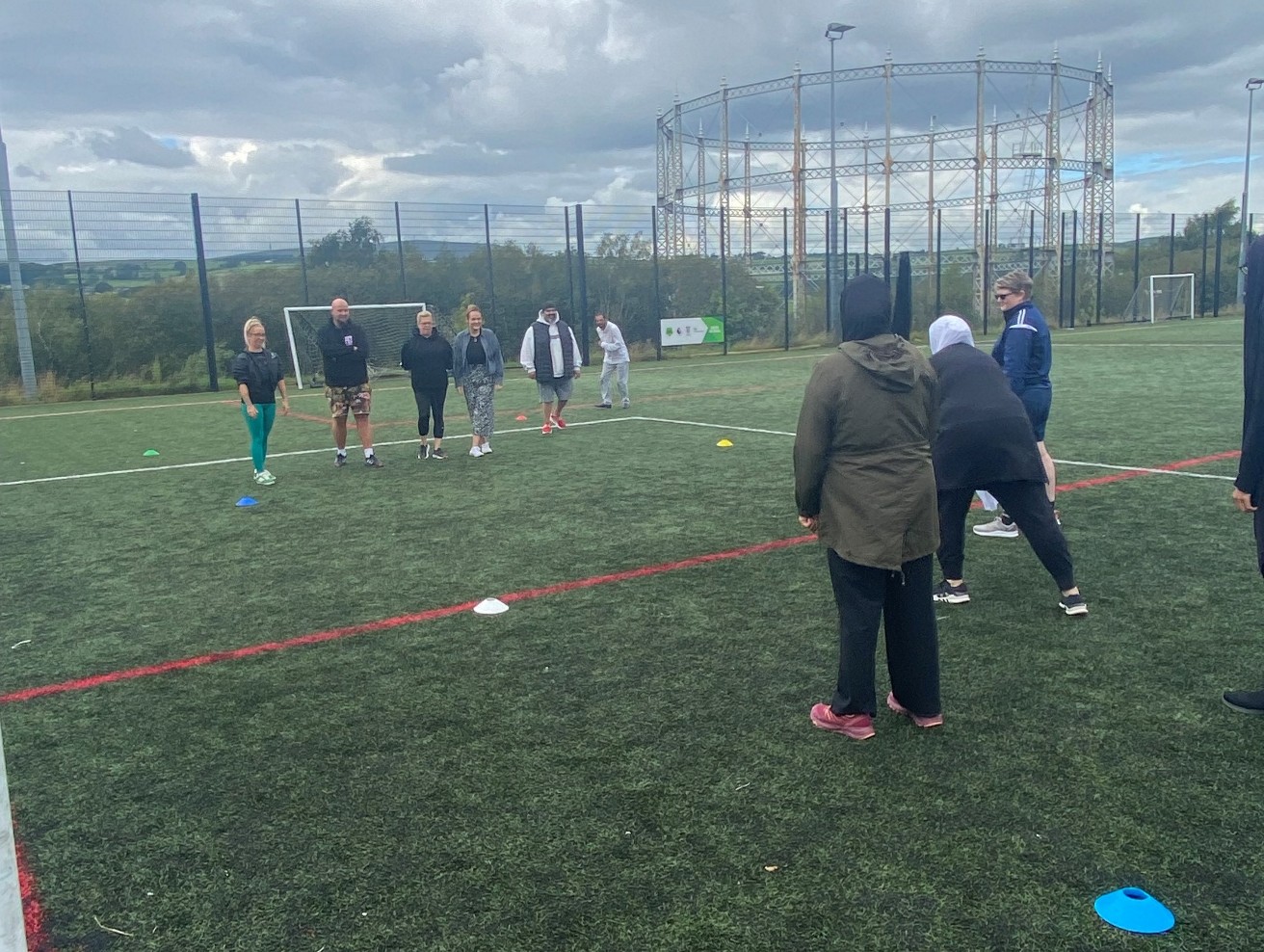
Active Lancashire has received funding from Sport England to boost levels of physical activity among those in greatest need, from the most inactive communities.

Preston is among the 27 places set to benefit from a share of Sport England’s £250million investment into the heart of communities across England, designed to tackle inactivity and inequalities by making sport, physical activity and movement accessible for everyone.

Sport England research calculates that active lifestyles save £8 billion a year for the healthcare system through illness prevention. This relieves some of the NHS burden, preventing more than 3.3 million cases of chronic health conditions a year, including 1.3m cases of depression, 900,000 cases of back pain and 700,000 cases of type 2 diabetes.

Less than half of children are meeting the Chief Medical Officer’s guidelines for daily physical activity and women, people from lower socio-economic groups and Black and Asian people are still less likely to be active than other adults.

To tackle these stubborn inequalities and break down barriers to a more active life, Sport England is taking a ‘Place-based approach’ – partnering with local organisations and leaders who understand both the specific needs of their communities and the local assets that are available – to support people to play sport and get active.

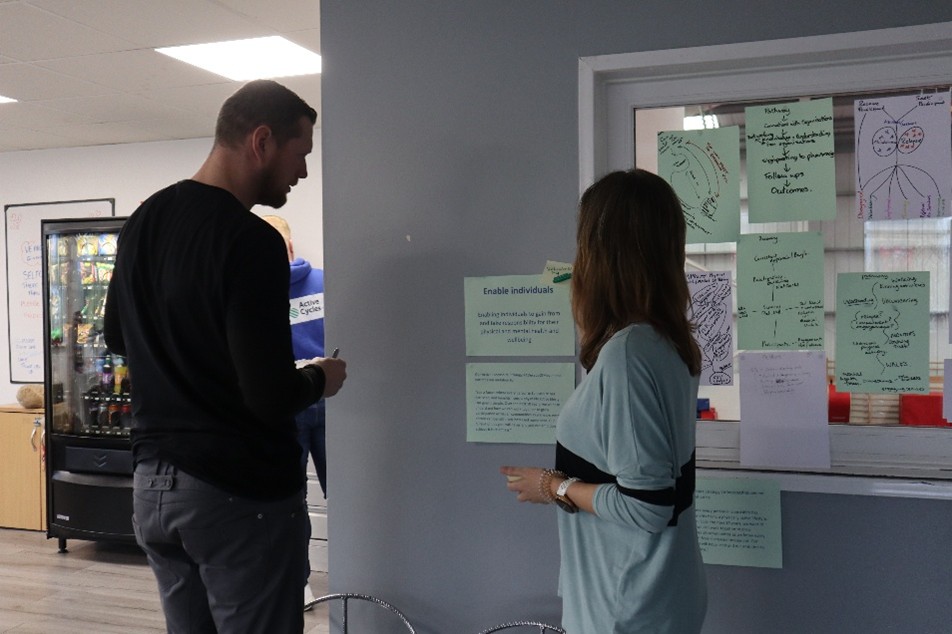
In Preston the money will be used to strengthen community engagement and leadership by supporting small VCFSE organisations to participate in Place Partnership work, amplifying community and youth voices on physical activity, mapping local spaces for movement, and delivering tailored system leadership training.

Lisa Dodd-Mayne, Sport England’s Executive Director for Place, said: “We want everyone, no matter where they live or who they are, to have the chance to be active and healthy. To do this, we’re focusing on places, towns, cities, and communities,
where people face the biggest challenges. We are proud to announce a further 27 new Sport England place partnerships, in every corner of the country, bringing the total number of places we are working with to more than 90. We are committed to working with local partners and communities to break down the barriers to physical activity so that everyone has equal access to a more active life. We are excited to see what we can achieve together in Preston”

Over half a million children feel they don’t belong to their community, Sport England research reveals

  • But the research shows sport clubs and activity groups give children the greatest sense of community
  • Access to sport and exercise can be a postcode lottery – especially in deprived areas
  • Dr Guddi Singh: “Postcode can be a stronger predictor of health than genetic code”
  • Sport England expands partnerships into 27 new places to boost activity rates & improve sense of community

After yesterday’s Autumn Budget, Sport England has announced a major expansion of its work in places with high rates of inactivity.

The expansion aims to use community exercise and sport to address the growing challenge of people feeling disconnected from their communities, including children and young people. New research by Sport England has found:

  • Over half a million children (1 in 10) aged 12–17 say they don’t feel they belong where they live – that’s equivalent to the population of Bristol.[1]
  • Almost 1 in 5 (close to 845,000) do not feel proud of where they live
  • Among those who lack pride in their area, almost half (45%) say it’s because there is nowhere to go for young people, while 4 in 10 cite anti-social behaviour and worries about crime

The research also points to a powerful solution: exercise and sport. When asked what gives them a sense of community (aside from friends and family), the top answer was sports clubs and activity groups – with over half (56%) of children and young people saying that this gives them a sense of community.

However, access to exercise and sport is often dependent on where you live, with affluence and activity levels closely linked. Over a third of people (34%) are inactive in England’s most deprived places, compared to 20% in the least deprived. This creates a ‘postcode lottery’ for physical activity, which can deepen health inequalities across the country.

Tackling inactivity is one of the best ways to boost national health and wealth, with Sport England research showing that every £1 spent on community sport and exercise delivers £4.38 [2] back for the economy and society in health, wellbeing, happiness, community cohesion, employment and economic growth.

To provide opportunities for everyone to exercise, Sport England is expanding its partnerships to a further 27 places, with each place in the top 20% for inactivity, social need, deprivation and health inequality at a national level. This work supports the aims of Uniting the Movement, Sport England’s 10-year strategy, and helps deliver the Government’s wider goals of improving health, growing local economies and building stronger, fairer communities.

Speaking from Blackpool – where Sport England has been working in partnership with Move Together Blackpool for a year tackling inactivity, including low activity rates among children and young people – CEO Simon Hayes said: “Sport and exercise are a fantastic way for people to connect with their communities. However, if you live in a less wealthy place, the less active you are. That’s why we focus our resources on places where they can have the most impact – so children and young people in lower-income areas like Blackpool have places to go and take part in sport and activity.

“Making exercise a normal part of life for everyone, all over the country, drives major social and economic value; active lifestyles save the health system £8 billion a year. If everybody can take part in sport and exercise – regardless of background, bank balance or postcode – we will all be healthier, wealthier and happier.”

Sport England’s Director of Place, Lisa Dodd-Mayne, said: “Inactive children living in lower income households are more likely to grow up into inactive adults with more health issues and less happiness – and that’s a ticking timebomb for our country’s future. By working together with communities who know what’s best for them, we co-create opportunities to get active that local people and children want and need in the place they live. This can help inspire lifelong active habits in children and young people.  Active children and young people are more likely to become active adults.”

Sport England Chair, Chris Boardman, said: “Health experts call exercise the “miracle cure”; it is fantastic for our health, happiness, and economy. That’s why it’s vital that every adult and child can take part in sport and exercise. Our work in local places will help end the postcode lottery for physical activity – and get people active from the ground up.”

Dr Guddi Singh, paediatrician, health campaigner and broadcaster said: “As a paediatrician, I see every day that a child’s postcode can be a stronger predictor of their health than their genetic code. When local streets feel unsafe, there’s nowhere affordable to go, and young people don’t feel they belong, it shows up in their bodies and in their minds.

“If we care about the future of public health, we have to turn our thinking on its head: health isn’t built in hospitals, it’s built in homes, schools, streets and parks. That’s why this place-based investment from Sport England matters so much. It backs the communities where children actually live, learn and play – and gives them a real chance to move, connect and thrive.”

Andy Taylor, CEO of the Active Partnerships National Organisation, said: “Many of the Place Partnerships that Sport England is investing in are led by Active Partnerships from our network of 42 organisations. This is vital investment for places across England and our network will work with partners and communities, ensuring that it is used in the most effective way for each of the 27 recipient places.

“Every place is different, and as local experts and great connectors that bringing real change from the ground up, Active Partnerships are engaging with key stakeholders, including voluntary organisations, health partners, local authorities, and communities, to support local people to be active in ways that work for them.

“Our Active Partnerships know from years of experience that sport and physical activity has the power to bring people together, creating stronger connections and thriving, more resilient communities. It can also help foster a sense of personal pride and achievement, as well as pride in the places where people live, work, and play.”

Working in partnership with communities

To tackle inactivity in these new 27 places, Sport England is taking a Place-based approach, partnering with Active Partnerships, other local organisations, and with leaders who understand both the specific needs of their communities and the local assets that are available to support people to play sport and get active.

By embedding physical activity in the heart of local systems, Sport England is helping build a healthier, more connected and more productive nation – focusing its time, funding and energy on places and people that face the biggest barriers to getting active, where activity levels are lowest and inequalities are deepest. 

Sport England is investing £250 million of National Lottery and exchequer funding into this way of working and into more than 90 places across the country.

The power of Place-based working

Sport England has been testing this community-based approach since 2018, with insight from pilot areas demonstrating that its investments are making a positive contribution towards changing the way local systems work and reducing inactivity amongst those that need the greatest support. Two key groups it’s targeting include children and young people from low-income backgrounds, and older adults at risk of long-term health conditions.

A flagship programme working in deprived communities in Bradford to get children aged five to 14 and their families physically active improved children’s total physical activity by 8.3 minutes a day and over 70 minutes a week.  In Greater Manchester, changes in local systems have led to an increase of activity levels for children and young people so they are now above the national average. In Doncaster, the number of active adults has risen from 53% to 58% since 2015 – an increase of almost 17,000 people.

For more information on Sport England’s Place Partnerships and how to get involved, visit www.sportengland.org.


[1] Online research conducted on behalf of Sport England by OnePoll between 10-14 November 2025, interviewing 2,000 UK children.

[2] Sport England’s Social Value of Sport & Physical Activity Year 2 Report, based on work by State of Life, Sheffield Hallam University, and Manchester Metropolitan University.

Active Lancashire Launches 2024-25 Impact Report Showcasing Progress Towards ‘Move More, Live Well’ Vision

Active Lancashire has published its 2024-25 Impact Report, highlighting achievements and progress against the ambitions set out in our Decade of Movement Strategy: Move More, Live Well. The report reflects our commitment to creating a healthier, more active Lancashire through six strategic priorities: Inequalities, System Leadership, Place Leadership, Environment, Children and Young People, and Health.

Key Highlights include:

  • Lancashire School Games: Engaged 6,760 young people across 94 activities, inspiring participation and inclusion.
  • Skills and Qualifications: Delivered 742 qualifications in partnership with Lancashire and South Cumbria ICB, supporting workforce development.
  • Active Cycles: Saved 2,958 bikes from landfill, refurbishing or repurposing them for community use.
  • Social Value Impact: Generated £13.7 million in social value, equating to £3.26 for every £1 invested in our projects.

Adrian Leather, Active Lancashire Chief Executive commented: “This year’s report demonstrates the power of collaboration and innovation in tackling inequalities and improving health outcomes across Lancashire. Every achievement brings us closer to our vision of a county where everyone can move more and live well. “

The full Impact Report is available here.

Free e-learning courses available

The Active Learning Zone is a free, inclusive space where anyone can learn, grow, and build new skills, empowering individuals, volunteers, and professionals to thrive at their own pace while helping create a stronger, healthier Lancashire. 

For one learner, feeling isolated at home with a new baby, the platform became a lifeline. Accessing free online courses meant she could learn in her own time, build knowledge to support her health and wellbeing, and still balance family life.

“It’s helped me keep my mind active and given me a bit of time just for me,” she shared. 

The Active Learning Zone is more than a platform, it’s a community of growth, confidence, and connection for everyone. 

To see what FREE courses we offer click here

Active Lancashire Learning Zone Supporting Family Hubs across the region

Across Lancashire, Family Hub staff are growing in confidence and capability thanks to our partnership and the multi-skills Activator course. Together, we’ve connected, inspired, and empowered teams to deliver fun, inclusive, and engaging activities that bring families closer through movement and play. 

This training hasn’t just built skills, it’s sparked confidence, creativity, and growth, enabling staff to offer a broader range of activities and create more vibrant, active spaces for families to thrive. 

Each session is more than just learning, it’s building stronger families, confident staff, and healthier communities

To know more on how you can become an Activator click here.

Supporting Communities with Basic IT Skills

Active Lancashire is on a mission to promote healthy lifestyles and stronger communities, but we’ve also seen how digital exclusion can hold people back from work, education, and everyday services. 

To tackle this, we created a flexible basic IT skills e-learning course designed to be accessible, supportive, and practical. Learners gained confidence through real-life tasks, receive ongoing support and signposting. 

Our Rossendale Works team has been at the heart of this, helping learners, often groups attending yoga and wellbeing sessions, build digital skills alongside their personal development.  

What have we seen? Increased confidence, better access to services, and new opportunities for work and learning, all while strengthening community connections. 

Want to know more, contact the learningzone@activelancashire.org.uk 

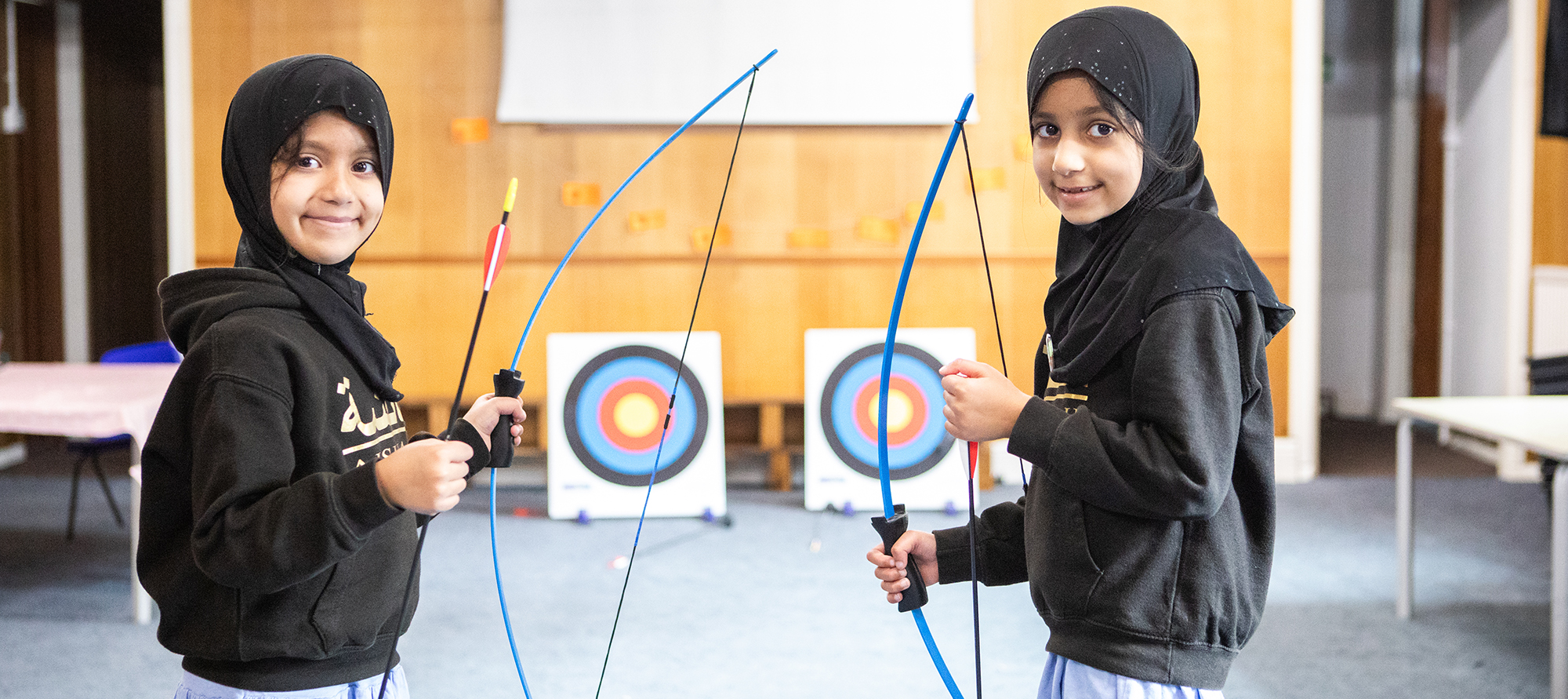
Supporting physical activity opportunities in Madrassah settings

Through a shared vision of healthier, more active communities, TaAF and Active Lancashire have built a strong and trusted partnership. Together, we set out to upskill Madrassah staff, equipping them with the tools and confidence to embed sustainable physical activity into everyday learning. 

By introducing the Multi-Skills Activator training, staff were empowered to lead fun, inclusive sessions that kept children moving and engaged. The impact has been inspiring, teachers report sharper concentration, greater enthusiasm, and a shift toward more dynamic, interactive lessons

What began as a training initiative has grown into a lasting movement for change, strengthening both confidence and community from within. 

To know more on how you can become an Activator click here

Improving Digital Skills in Lancashire

Partnering with South Ribble Council, Active Lancashire launched a digital inclusion initiative aimed at breaking down barriers for adults facing limited access to technology. Working closely with the community, we focused on small groups of South Asian women, helping them gain the confidence and skills to navigate digital tools safely. 

Through in-person training and laptops provided during sessions, participants learned essential skills, from using email and browsing safely, to accessing services like healthcare, job applications, and government sites. Many had minimal prior experience, and some faced language barriers, but our tailored approach ensured they could participate fully, learn at their own pace, and engage confidently online

Want to know more, contact the learningzone@activelancashire.org.uk 

Active Lancashire Learning Zone supporting best Safeguarding practices in the sector

At Active Lancashire, Safeguarding isn’t just a policy, it’s at the heart of everything we do. From children trying a new sport to adults in wellbeing programmes, everyone deserves to feel safe, supported, and respected

Through dedicated roles, trained County Sport Welfare Officers, and practical Safeguarding courses, we equip staff and volunteers with the skills and confidence to recognise, respond to, and prevent abuse or neglect. Our courses, delivered online or in person, empower professionals to act swiftly, stay compliant, and create safe, thriving environments

By embedding Safeguarding into our culture and working closely with partners across Lancashire, we ensure that people can be active, confident, and connected.  

We deliver both Safeguarding Adults and Safeguarding Children courses.

Neurodiversity in the Workplace

A member of the team from ESG Global explored our Neurodiversity e-learning course and found it both informative and engaging. One participant shared: “The course is really well made; clear, concise, and very engaging. I thought the narrator was excellent and easy to understand. I especially liked the breakdown of types of neurodivergence. I consider myself quite knowledgeable about neurodiversity, but I learnt some new facts!”

Awareness of Mental Health at Work

A participant from Lancashire Cricket Club recently tried our bite-sized e-learning course and found it both accessible and practical. Learning at her own pace, she was able to take in the content, make notes, and put new ideas into practice in her working life. She shared: “It was engaging, useful, and I would definitely recommend it. It was also great to have time to reflect.”

Keidokwai Judo Club

Keidokwai Judo Club has been giving a platform to the voices of its young members with support from Active Lancashire. Through a Youth Voice initiative, the club invited juniors to share their thoughts on safety, wellbeing, and what makes them proud to be part of the club, providing valuable insight to help shape its future direction. Their commitment to creating a safe and supportive environment was recognised through a Community Chest Giveaway, receiving a Welfare Pack full of helpful resources for their Club Welfare Officer.

Parbold Badminton Club

Parbold Badminton Club has been strengthening its foundations with support from Active Lancashire. Together, we reviewed the club’s governance, safeguarding policies, and committee structure, helping to streamline roles and ensure everything reflects the club’s growing membership. By updating their safeguarding policy, constitution, and codes of conduct, the club is now more aligned, inclusive, and future-ready. Their fantastic progress was recognised through a Community Chest Giveaway, receiving a box of badminton goodies kindly donated by the Rossendale Badminton League, a well-deserved boost for a club on the rise!

Red Rose Angels Volleyball Club

Red Rose Angels Volleyball Club has gone from strength to strength with support from Active Lancashire. We helped the club secure funding and a new venue, and guided them through affiliation with Volleyball England. By offering insight into governance, policies, and member involvement, the club engaged players to co-create a collaborative Code of Conduct that reflects their shared values. Their fantastic progress was proudly featured in our Club & Community Noticeboard Spotlight, celebrating their commitment to growth, teamwork, and community spirit.

Building Healthier Workplaces: How Champions Are Driving Change Across Lancashire

Active Lancashire’s Workplace Health Champions Training is transforming workplaces across the county. By empowering everyday employees with the skills to promote health and wellbeing, this course is helping organisations reduce stress, boost happiness, and create a culture of moving more

These champions are colleagues who care, leading simple but impactful initiatives like lunchtime walks, challenges, tips, ideas, training and signposting. 

 The result? Stronger teams, healthier workplaces, and positive change that ripples across the community. “By equipping people to care for themselves and support others, we’re creating a healthier, happier, and more active Lancashire one workplace at a time.” 

Want to make a differenceclick here to become a champion

5
Based on 8 reviews
powered by Google
  • Great people willing to engage sport for all

    Marcus Baudet

    Great place

    Tamasin Lamb

    Still a great place with hard working staff to get the inactive active.

    Kristy Telford

    Excellent

    James Rasmussen

Active Lancashire Limited is a Company Limited by Guarantee Registered in England and Wales Company No: 06859894 and Registered Charity no. 1159832. 

Our Location